
After the invasion of Ukrainian territory by the Russian Federation in 2022 and the terrorist attacks by the Hamas group in Israel in 2023, geopolitics once again became a widely discussed and debated topic in political, diplomatic, academic, and media circles.
In general terms, the concept belongs to Political Science when geographical conditions influence political studies, decisions, and planning. Historically, many scholars have contributed to the understanding of this concept. Among them were the Englishman Halford Mackinder (1861–1947), mentor of British alliance policy during World War I (1914–1918); the German general and geographer Karl Haushofer (1869–1946), architect of the German-Japanese alliance during World War II (1939–1945); the Dutch-born American Nicholas John Spykman (1893–1943), who inspired the U.S. containment policy against communism during the Cold War; and the American Alfred Thayer Mahan (1840–1914), whose theory of Sea Power (1890) inspired U.S. naval strategy.
The German professor Friedrich Ratzel (1844–1904) is considered the forerunner of Geopolitics. In his work “Political Geography,” he viewed the State as the result of the man–land relationship: man influences the State through his culture and political activity, while the State remains inseparably connected to the land. It is on the land (the physical base or territory) that man performs his various activities, which, if vigorous, predispose the State to growth, and if weak, to decline and extinction.
However, it was the Swedish professor and jurist Johan Rudolf Kjellén (1846–1922) from the University of Gothenburg who first defined the term, describing it as the branch of politics that studies the State as a geographical organism or spatial phenomenon. For Karl Haushofer, geopolitics is the science that deals with the dependence of political events on the land; the art of political action in the life-and-death struggle of states for living space. The Munich Institute of Geopolitics (Germany) defined it as the geographical consciousness of the State and the science of the relationship between the Earth and political processes.
Thus, understanding the concept arises from a detailed comprehension of the interspatial relationships of a territory, considering that geography can influence and condition political, economic, and social decisions based on the stimuli of a given situation.
In Brazil, Army Marshal Mário Travassos is considered one of the founding fathers of Brazilian Geopolitics. His work “The Continental Projection of Brazil” (1931) is regarded as a milestone of national geopolitics. For him, the concept refers to how the interpretation of geographical facts results in an assessment of a country’s situation at a given moment.
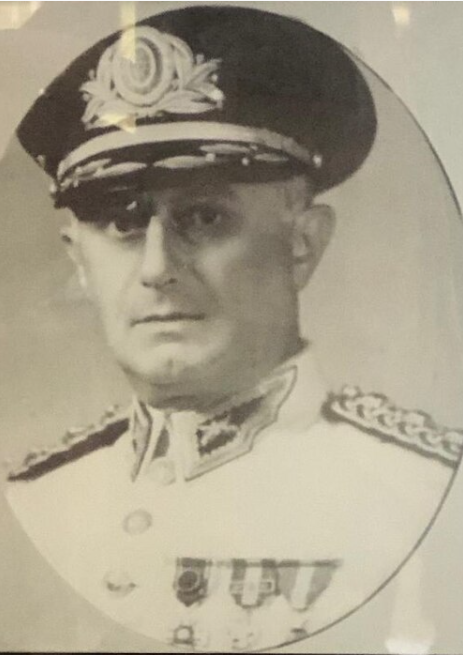
Travassos' thought marked the genesis of Brazilian geopolitics, influencing his generation and those that followed by providing analyses and guidelines to elevate Brazil’s position in the regional context.
Another Brazilian geopolitician was Army General Carlos de Meira Mattos. Author of “Brazil: Geopolitics and Destiny,” he defined geopolitics as an indicator of political solutions consistent with geographical realities; the science of governing the State inspired by the geographical realities of its territory.
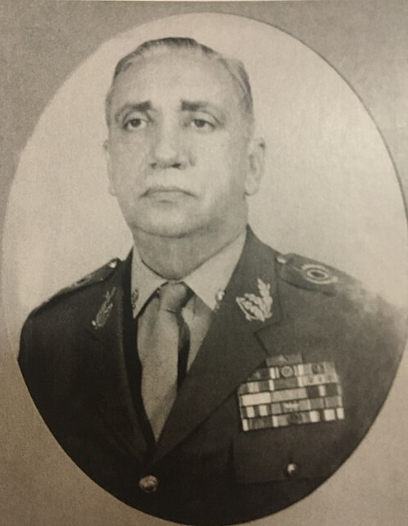
In another work, “Geopolitics and the Projections of Power,” he stated that the physical environment in which man lives provokes stimuli that inspire, guide, and awaken needs. In “Geopolitics and Modernity: Brazilian Geopolitics,” he described the influence of geography on human action as well as the effects of politics applied to geographic spaces inspired by historical experience.
Therezinha de Castro defined it as the science that connects geographical aspects with political events, aiming at the rational use of all branches of geography in State planning, seeking immediate or long-term results.
Finally, from the concepts above and as defined by various thinkers, it can be concluded that Geopolitics concerns how geographical conditions influence studies and decisions, linking political, economic, and social planning to the constraints of the geographical environment.
REFERENCES:
- BONFIM, Uraci Castro. Army Command and General Staff School (ECEME). Course of Politics, Strategy, and High Army Administration. Rio de Janeiro, 2005.
- BRAZIL. Ministry of Defense. Superior War College. Basic Manual. Volume II. Specific Subjects. Rio de Janeiro, 2009.
- CASTRO, Therezinha de. Geopolitics: Principles, Means, and Ends. General Benício Collection. Army Library. Rio de Janeiro, 1999.
- MAFRA, Roberto Machado de Oliveira. Introduction to the Study of Geopolitics. Department of Studies. Superior War College. Rio de Janeiro, 2002.
- MATTOS, Carlos de Meira. Brazil: Geopolitics and Destiny. Army Library Publisher. Publication 452, Volume 131. Rio de Janeiro, 1975.
- MATTOS, Carlos de Meira. Geopolitics and the Projections of Power. Army Library Publisher. Publication 472, Volume 152. Rio de Janeiro, 1977.
- MATTOS, Carlos de Meira. Geopolitics and Modernity: Brazilian Geopolitics. Army Library Publisher. Publication 726, Volume 386. Rio de Janeiro, 2002.
- ROCHA, Marco Antônio Resende Soares da. The Contribution of Marshal Mário Travassos’ Geopolitical Thought to National Strategic Conception in the Face of 21st-Century Challenges. Army Command and General Staff School. Rio de Janeiro, 2020.
- TRAVASSOS, Mário. The Continental Projection of Brazil. Companhia Editorial Nacional. Brazilian Pedagogical Library. 3rd ed., Vol. 50. Rio de Janeiro, 1938.