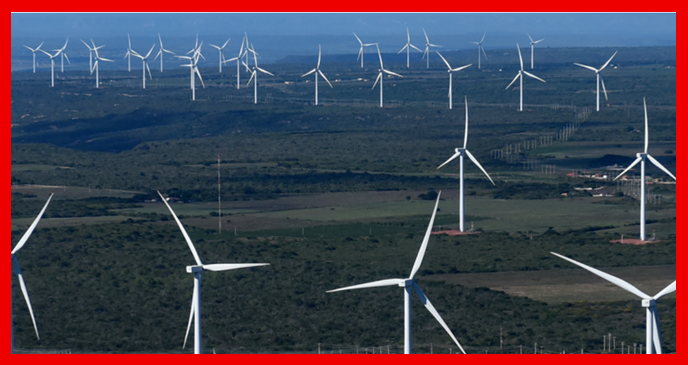
Photo: Ricardo Botelho/MME.
The International Renewable Energy Agency, in an article entitled “The Geopolitics of the Energy Transformation: The Hydrogen Factor,” points out that countries with an abundance of low-cost renewable energy could become global producers of green hydrogen (H2V), with geoeconomic and geopolitical consequences, fostering competitiveness and cost-effectiveness in locations that combine abundant renewable resources, space for solar or wind farms, access to water, and the capacity to export to major consumption centers.
And the International Energy Agency stated that, for an impact on the transition to clean energy to occur, end-use sectors must benefit from competitive advantages in the production region.
In Brazil, the National Energy Policy Council highlighted hydrogen as one of the priority themes for research and development, aiming at resource allocation. This statement followed the 2020 National Energy Plan (PNE 2050), which prioritized hydrogen in the context of decarbonizing the Brazilian electricity matrix. Not by chance, the country established a strategy for actions related to the development of the hydrogen economy, materialized through the National Hydrogen Program (PNH2), from 2021, under the responsibility of the Ministry of Mines and Energy.
In 2023, the National Confederation of Industry (CNI) launched the “Industrial Recovery Plan: a new strategy focused on innovation, decarbonization, social inclusion, and sustainable growth.” In that plan, “Mission 1: Decarbonization” is one of the solutions to combat global warming and reduce greenhouse gas emissions through the development of technologies related to hydrogen, which has played an increasingly relevant role in the international context.
Also in that year, CNI launched the “Strategic Industry Map 2023–2032: The Path to the New Industry.” In it, the decarbonization of industrial production would promote better conditions (attractiveness and credibility) for investments, generating new business opportunities. The following year, the Brazilian government launched the “Action Plan for Neoindustrialization 2024–2026,” presenting the main initiatives of the “New Industry Brazil (NIB)”, which would favor socioeconomic transformations aimed at overcoming barriers to Brazilian development.
Similarly to the “Industrial Recovery Plan,” the NIB included a specific chapter focused on the energy transition: “Mission 5 (Bioeconomy, decarbonization, and energy transition and security to ensure resources for future generations).” That chapter mentioned the importance of developing technologies aimed at low-carbon hydrogen and the resulting priorities for financing and innovation credit.
And in the 2023–2025 Triennial Work Plan of the Ministry of Mines and Energy, the competitive advantage arising from installing hydrogen production plants in port complexes (hubs), whose areas also included industrial plants, was highlighted. The understanding is that within a port complex, a series of strategic factors for the development of the H2V chain would be combined, such as export logistics, proximity to industrial hubs, and renewable energy sources used in electrolysis.
It is emphasized that the perspective is to consolidate low-emission hydrogen hubs in Brazil by 2035, with the purpose of catalyzing development and production, integrating infrastructure from production to storage, transport, and consumption. In the Northeast, one of the port complexes that meets all these premises, notably, is Pecém, in Ceará.
It is also known that the Northeast region is positioning itself as a producer of green hydrogen due to its high potential for renewable energy generation and its ports, geographically well located in relation to European markets. This statement is supported by the constant growth in wind and solar energy generation in recent years.
These conditions would be crucial to enabling the hydrogen economy, contributing to stimulating investments in the energy chain. Not coincidentally, studies indicate that H2V production would represent an opportunity for sustainable socioeconomic development due to low generation and production costs, contributing, therefore, to its competitiveness.
This is the scenario in which Ceará is inserted, full of market opportunities—especially in Europe—that could make it a global benchmark, a participant in the global energy transition, and capable of transforming the socioeconomic profile of the State through the production and export of green hydrogen for the benefit of the population of Ceará.
REFERENCES:
- Ministry of Development, Industry, Trade and Services. New Industry Brazil. Action Plan for Neo-industrialization 2024-2026. Brasília, 2024.
- Ministry of Mines and Energy. National Hydrogen Program. Proposal of Guidelines. Brasília, 2021. Available at: https://www.gov.br/mme/pt-br/assuntos/noticias/mme-apresenta-ao-cnpe-proposta-de-diretrizes-para-o-programa-nacional-do-hidrogenio-pnh2/HidrognioRelatriodiretrizes.pdf
- _______. National Hydrogen Program. Three-Year Work Plan 2023-2025. Brasília, 2023.
- _______. Northeast is seen as a major generator and exporter of renewable energy. Published on Dec. 15, 2023. Available at: https://www.gov.br/mme/pt-br/assuntos/noticias/nordeste-e-visto-como-grande-gerador-e-exportador-de-energia-renovavel
- National Confederation of Industry (CNI). Industry Recovery Plan. Brasília, 2023. Available at: https://static.portaldaindustria.com.br/media/filer_public/99/4c/994c17a5-e837-4aea-9de5-54048ec499b5/plano_de_retomada_9mai23_web.pdf
- __________. Strategic Industrial Map 2023-2032: The Path to the New Industry. Brasília, 2023. Available at: https://www.mapadaindustria.cni.com.br/download
- International Energy Agency (IEA). The Future of Hydrogen. Paris, 2021. Available at: https://www.iea.org/reports/the-future-of-hydrogen
- __________. Hydrogen in Latin America. From short-term opportunities to large-scale deployment. Executive Summary. 2021. Available at: https://iea.blob.core.windows.net/assets/760f6626-19c4-42d3-b830-9d2a0d897323/IEA_HydrogeninLatinAmerica_ES_BrazilianPortuguese.pdf
- International Renewable Energy Agency (IRENA). Geopolitics of the Energy Transformation: The Hydrogen Factor. Abu Dhabi, 2022.
- OLIVEIRA, Rosana Cavalcante de. Overview of Hydrogen in Brazil. Discussion Paper 2787. Institute for Applied Economic Research (IPEA). Brasília, 2022.